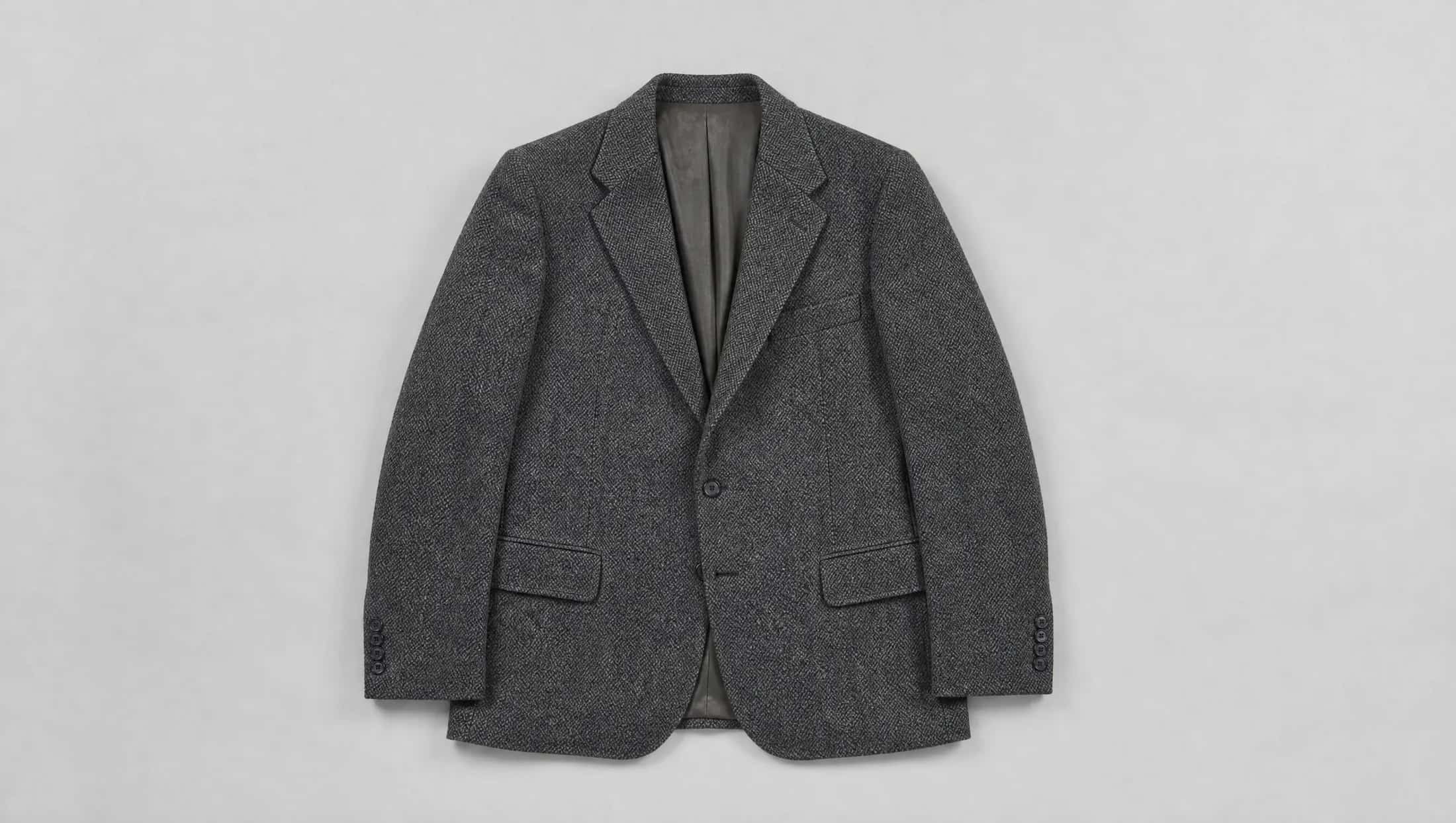
A reading of construction
Which decade is this from
The date is not on the label. It is in the width of the lapel, the height of the gorge, the direction of the pleats, the way the fly closes and the way a seam was finished. Each of those points to a span of years. Where enough of them overlap is the answer.
And where two of them cannot overlap at all, that is the more interesting result — and this is the one place it gets said out loud.
This reads construction, not provenance. It is not an authentication and it is not a valuation. For anything you are buying or selling, get a specialist.
Worked reading — one clue at a time
1900–2000
An empty century. Nothing has been ruled out yet.
Read this timeline as text
- Hem — Permanent turn-ups — points to 1905–1960.
- Pleats — Two forward-facing pleats each side of the fly — points to 1922–1955.
- Button material — Casein buttons, slightly translucent with a swirled grain — points to 1930–1955.
- Sleevehead — Roped sleevehead standing above the shoulder line — points to 1930–1942.
- Waist — High, strongly suppressed waist with a flared skirt — points to 1930–1942.
- Lapel width — Notched lapel over 4 in (10 cm) — points to 1935–1952.
- Fly — Nylon coil zip fly — points to 1965–2000.
 Lapel width and notch1900–1932 / 1935–1952
 Peaked lapel, double-breasted1928–1950
 Shoulder line and sleevehead1900–1965
 Waist suppression1930–1958
 Pleat direction1922–1955
 Turn-ups1905–1960
01 — The problem
Everyone can see it is old. Almost nobody can say how old.
Between “that looks vintage” and “that is late nineteen-thirties” sit several dozen specific, nameable features. A costumier knows them. A dealer who has handled ten thousand jackets knows them. Nearly everyone else is guessing from a general impression of oldness, which is the one thing that carries no information at all.
Reproductions make it worse, and so do repairs: a garment can look entirely of its period and still be carrying a zip fitted forty years after it was cut. The impression of oldness cannot see that. A list of construction features can.
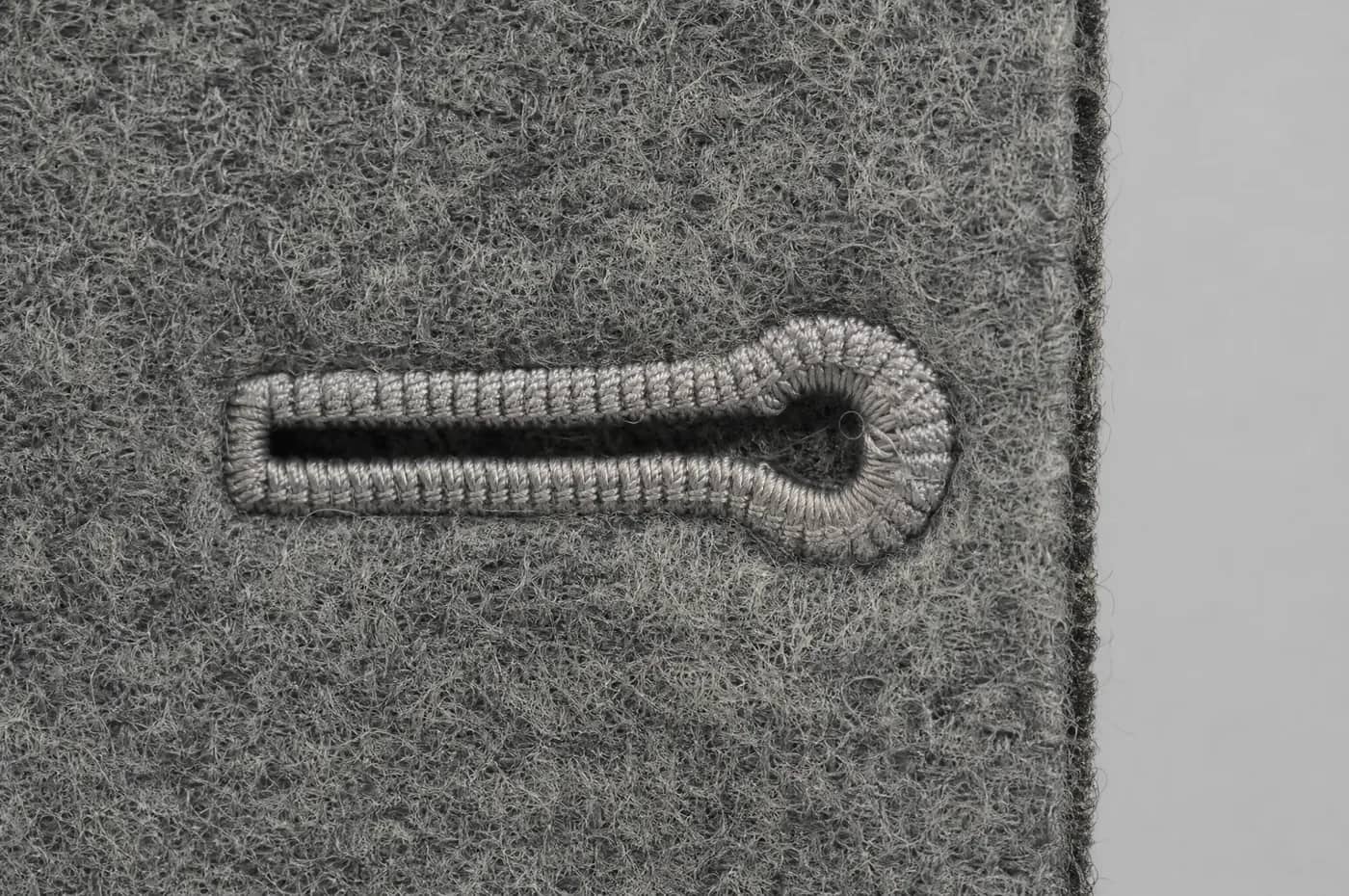
Hand-worked buttonhole. Irregular stitch length is a hand, not a machine.
02 — Method
Three steps, and you can check every one of them.
- 01
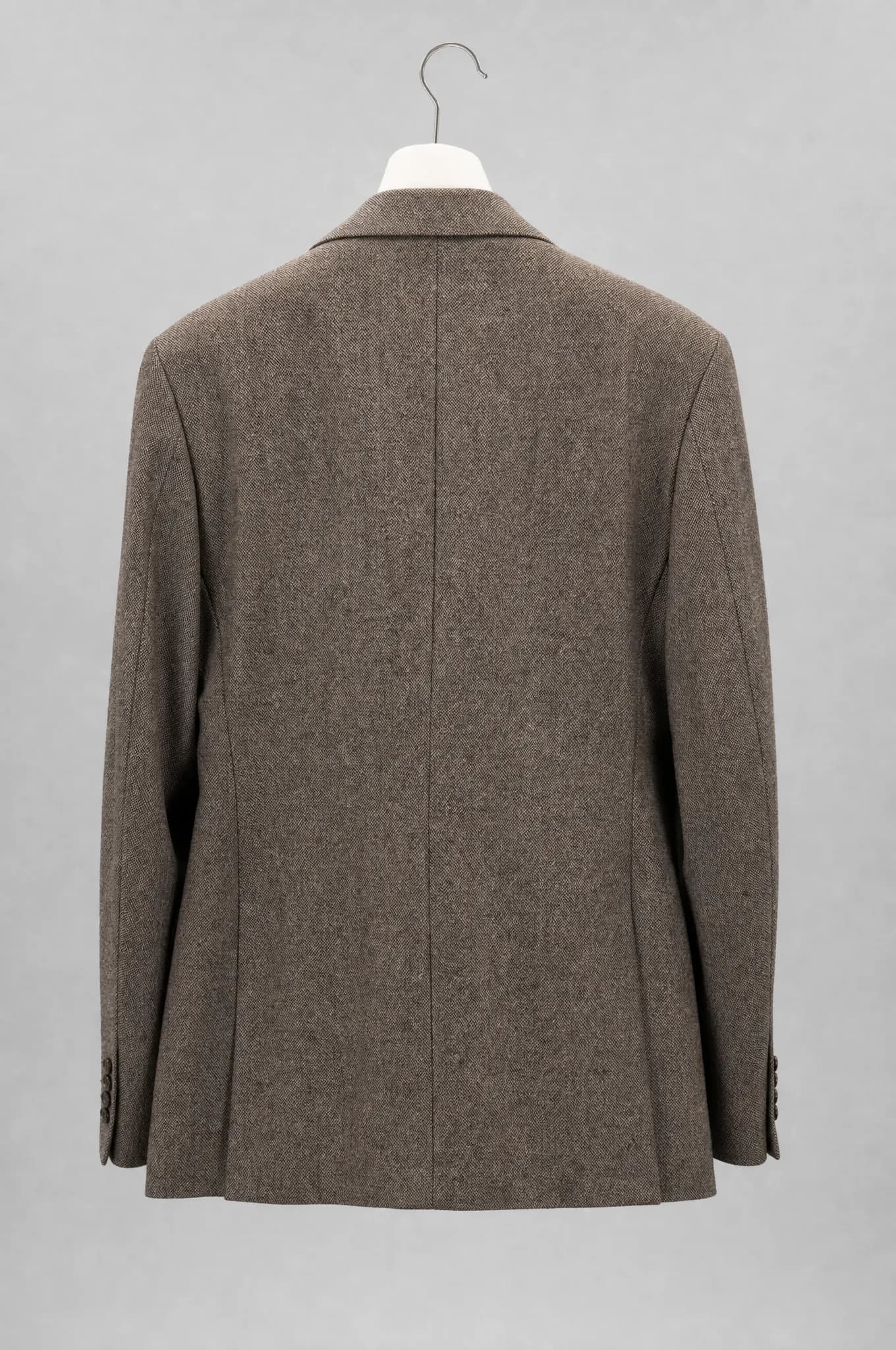
Photograph the garment
Lay it flat and shoot the whole front. Then, if you can, the details that carry the most information: a lapel from directly above, one hip pocket square on, the fly opened, a hem, and one seam from the inside.
- 02
See what each clue points to
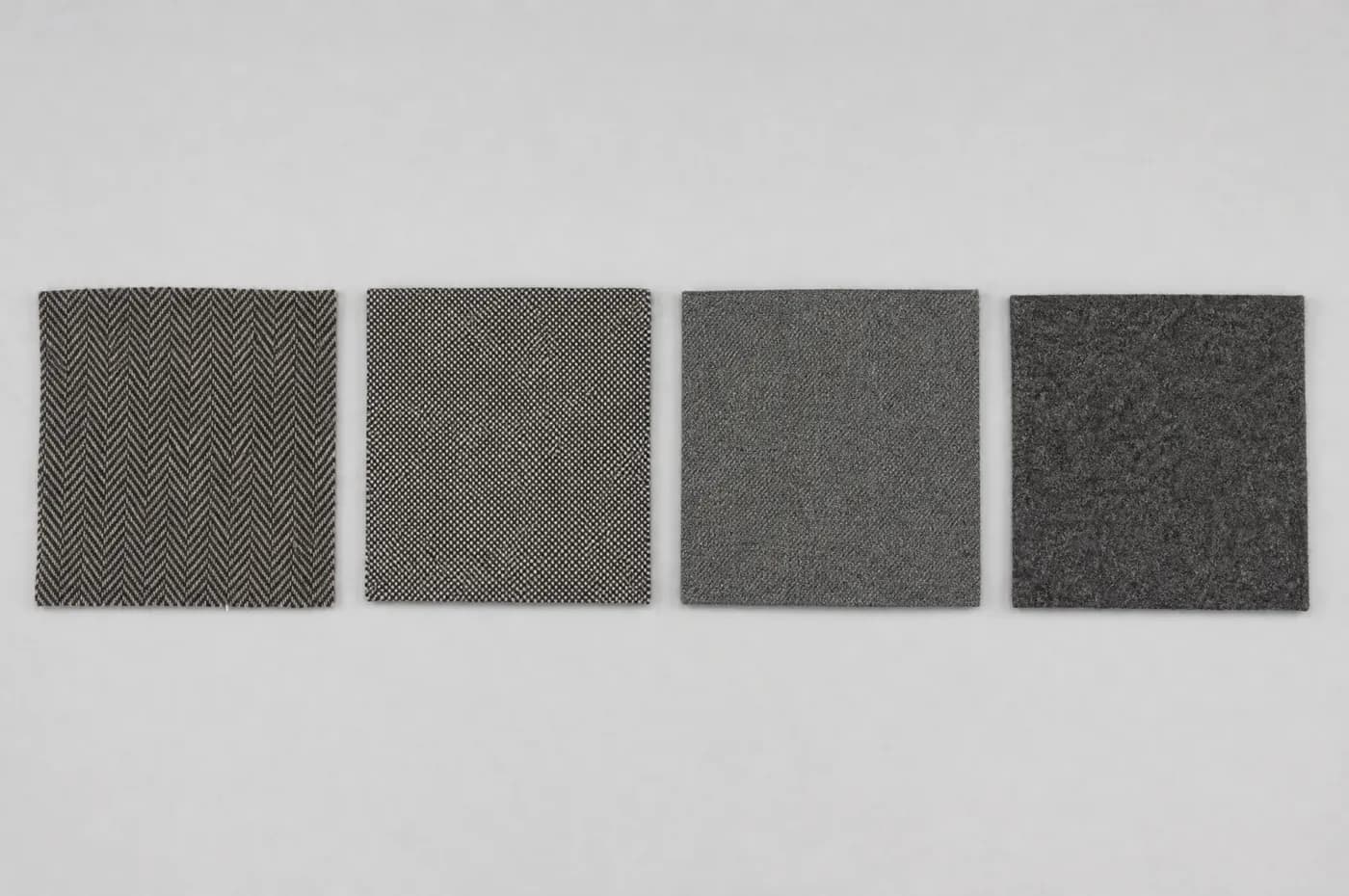
Every feature that can be identified is listed with the span of years it points to on its own, and with a line saying why that feature carries a date at all. Nothing is asserted without its interval next to it.
- 03
Read the overlap — and the clashes
The intervals are stacked on one century axis. Where they agree is the reading. Where two of them cannot both be true, both are marked and the clash is put at the top of the result, not at the bottom.
03 — A reading in full
Six clues, and the interval they leave.
These six all agree, so there is nothing to flag. What they leave is a span narrow enough to be useful and wide enough to be honest. Every number below comes from the published reference table, and the overlap is worked out in your browser — so you can redo it yourself on paper.
Read this timeline as text
- Shirt collar — Neckband cut for a detachable collar, with stud holes — points to 1880–1935.
- Shoulder line — Narrow natural shoulder, no padding — points to 1900–1925.
- Front buttons — Four-button front buttoning to a high point — points to 1900–1922.
- Hip pockets — Double-welt besom hip pockets, no flaps — points to 1900–1935.
- Waistband fittings — Brace buttons on the outside of the waistband — points to 1900–1940.
- Buttonholes — Hand-worked buttonholes with silk gimp — points to 1900–1955.
- The features that agree overlap across 1900–1922. That interval is the reading.
6 of 6 features agree on this interval. That is enough for the interval to survive one of them being wrong.
04 — What gets read
Garments, flat, and the parts that carry the date.
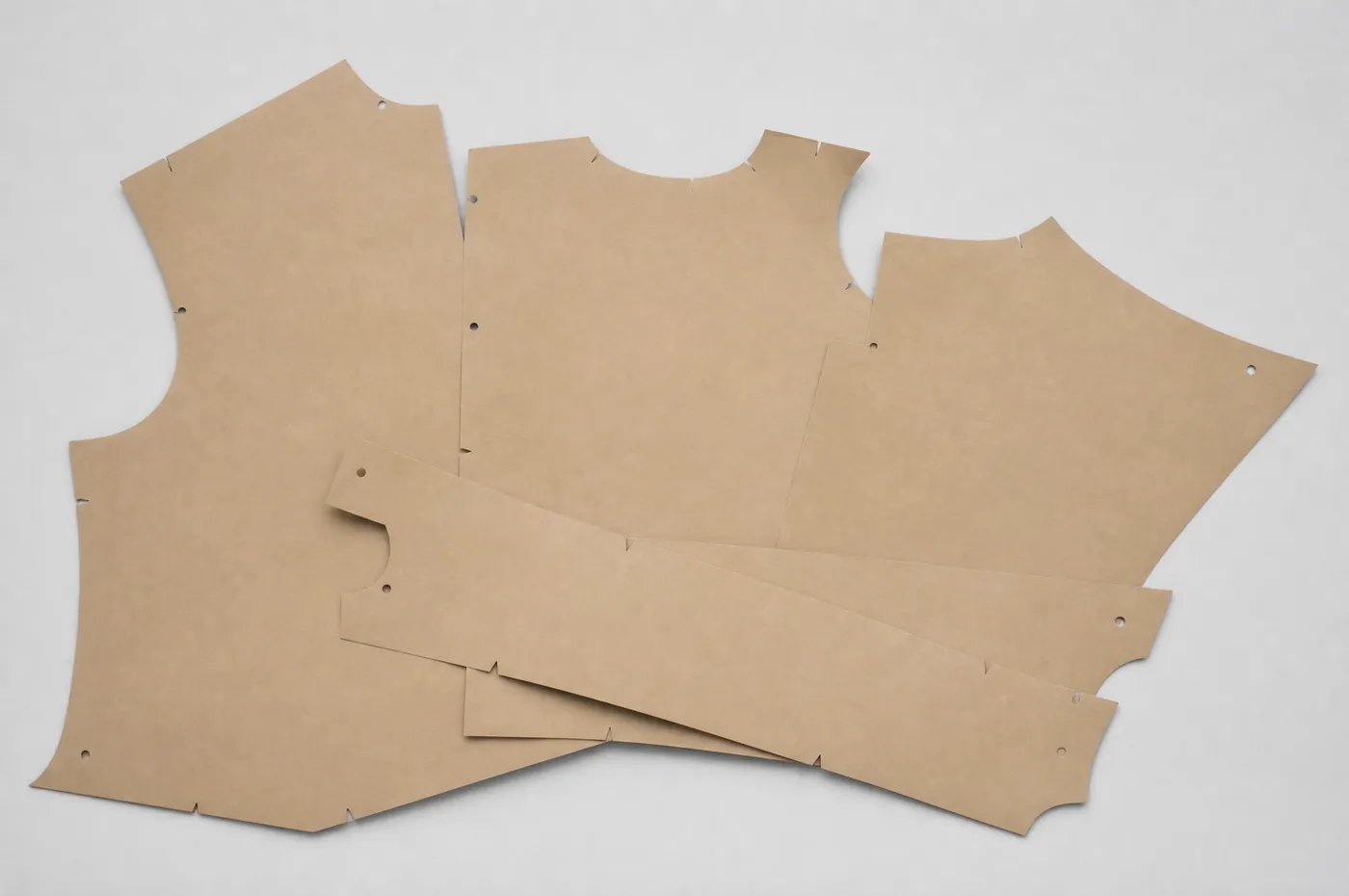
Every plate on this site is a garment or part of one. There are no people in any of them, and nothing here is toned, aged or filtered. This is a record shot, not a mood.
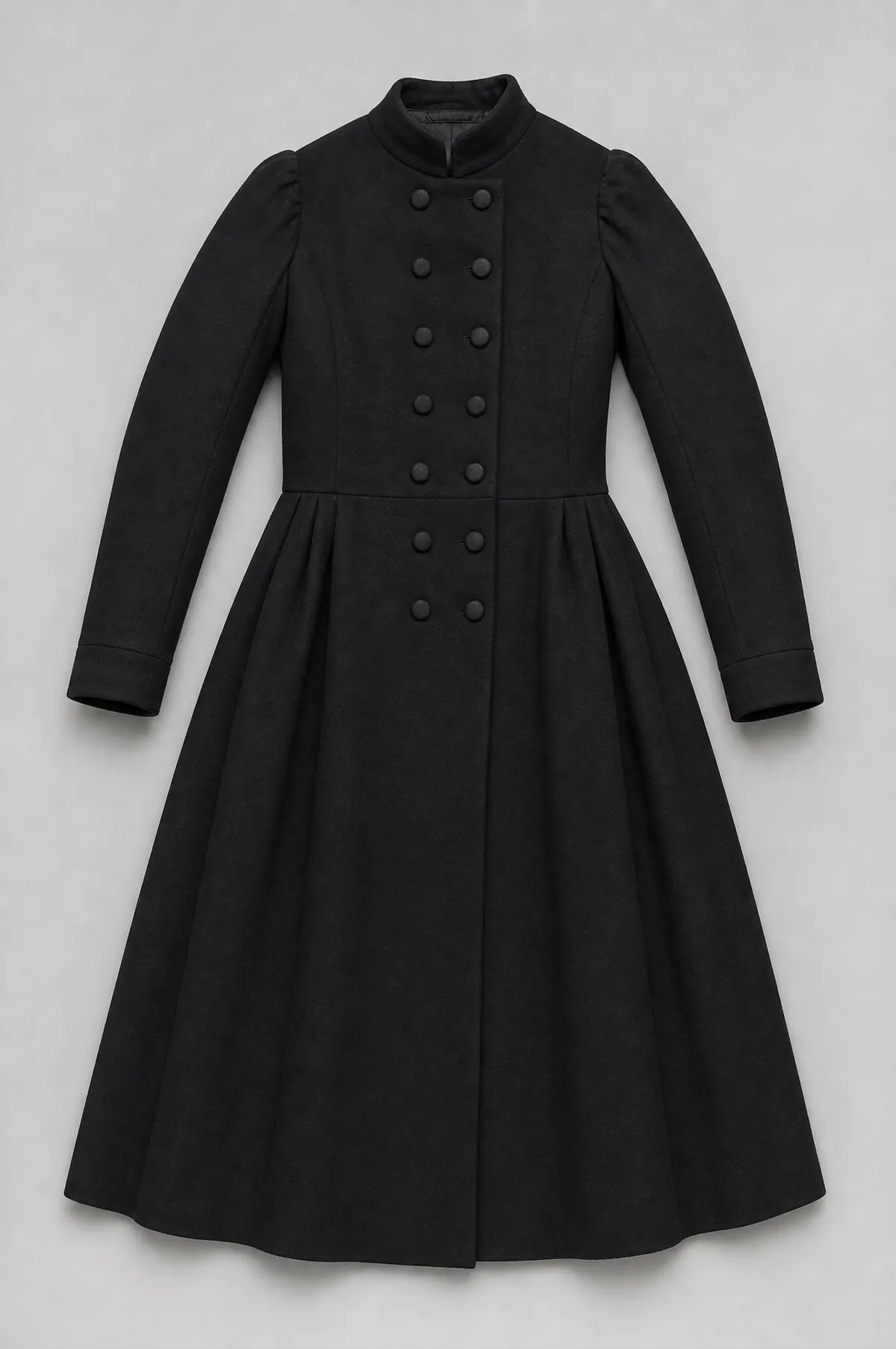
Frock coat — waist seam, full skirt 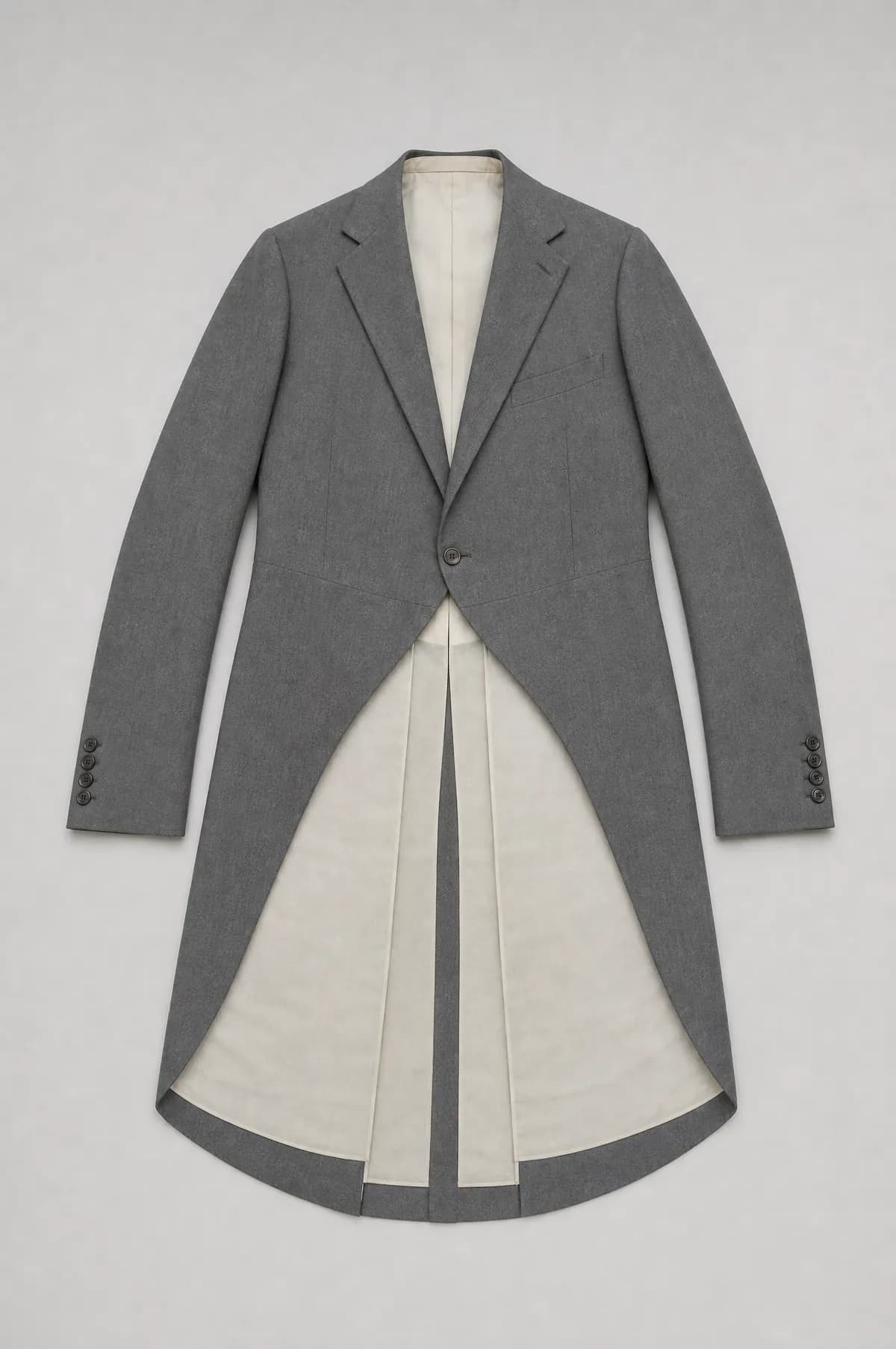
Morning coat — cutaway front 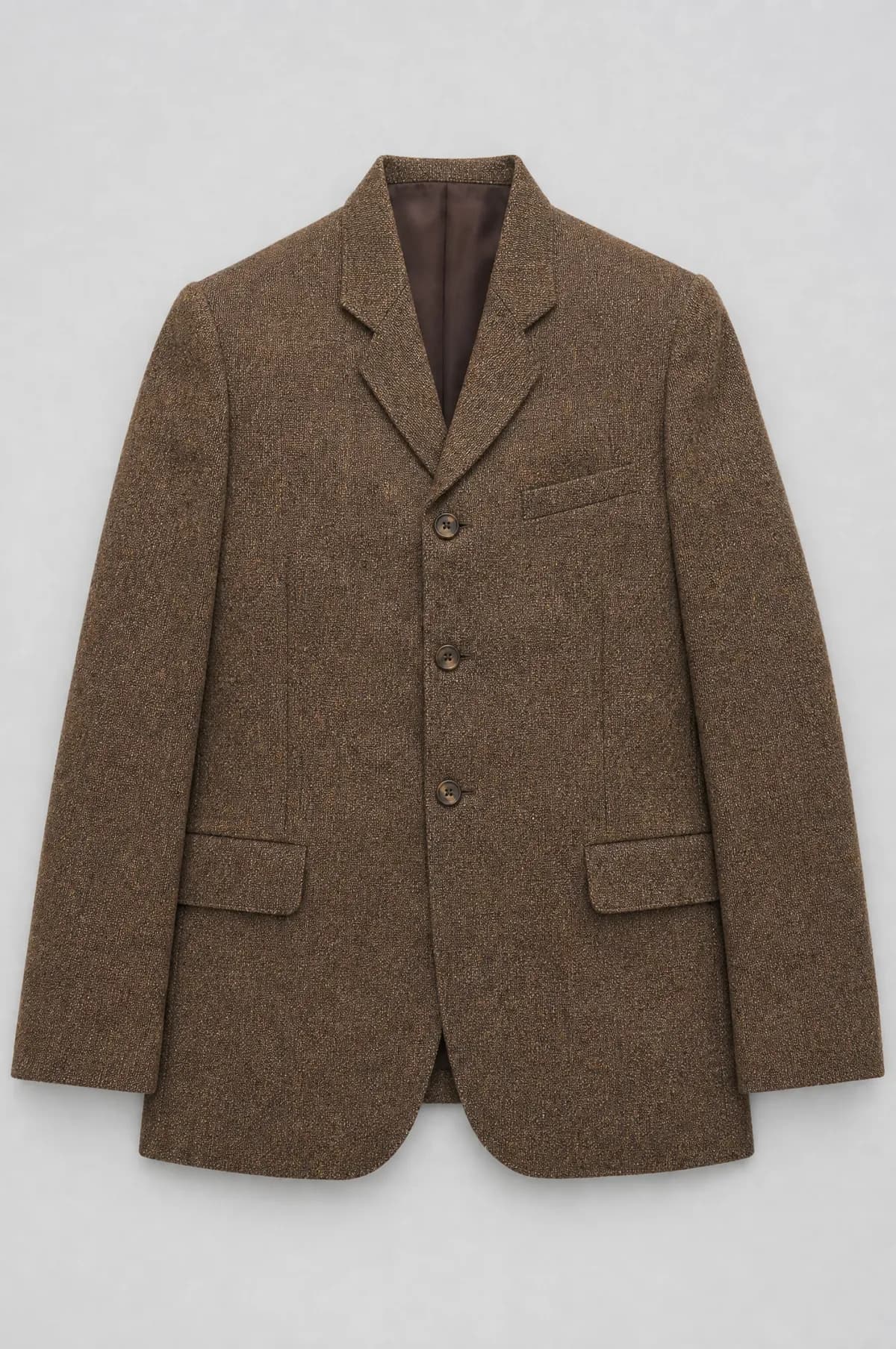
Lounge jacket — high buttoning point 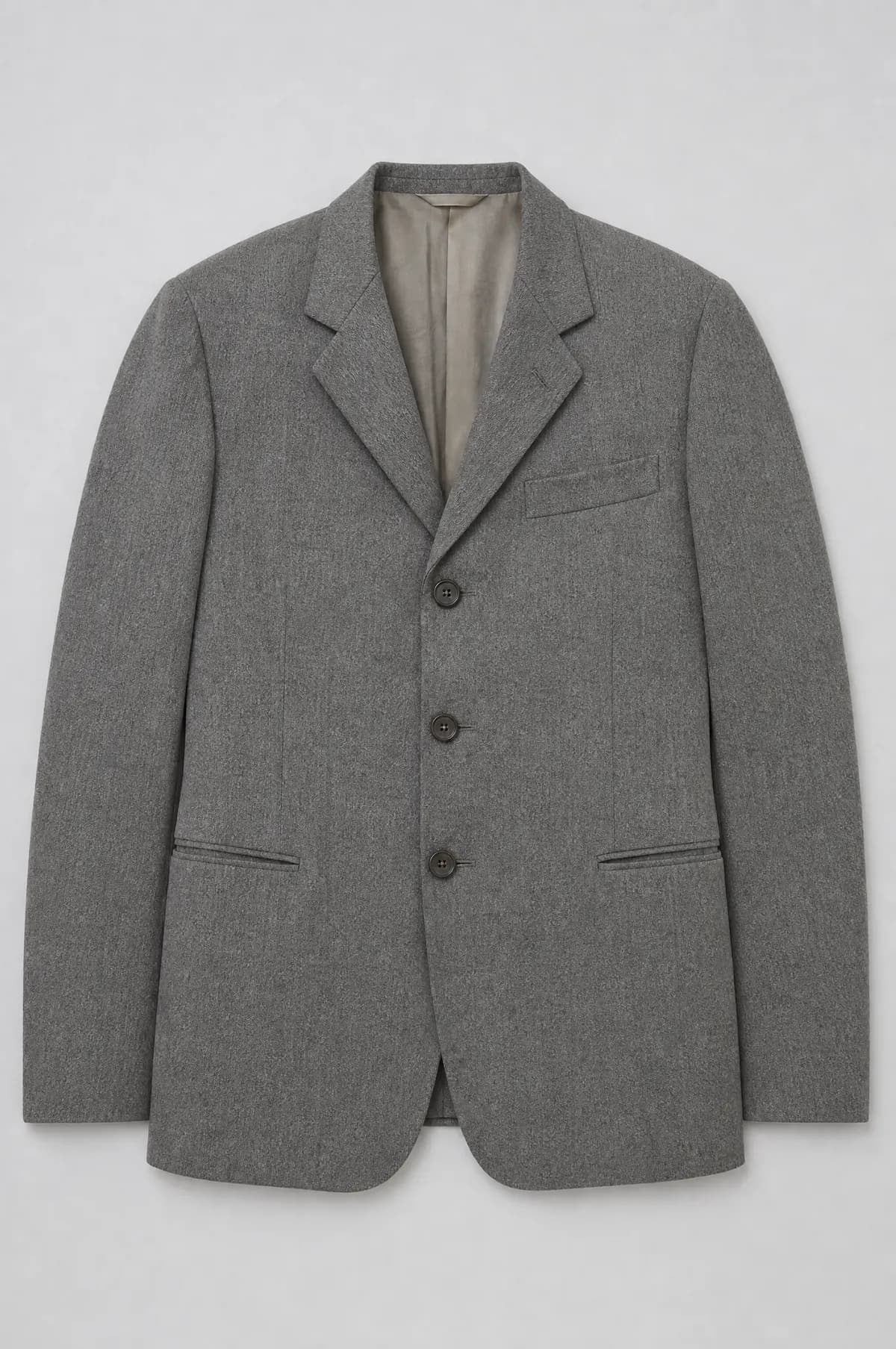
Narrow chest, straight hips 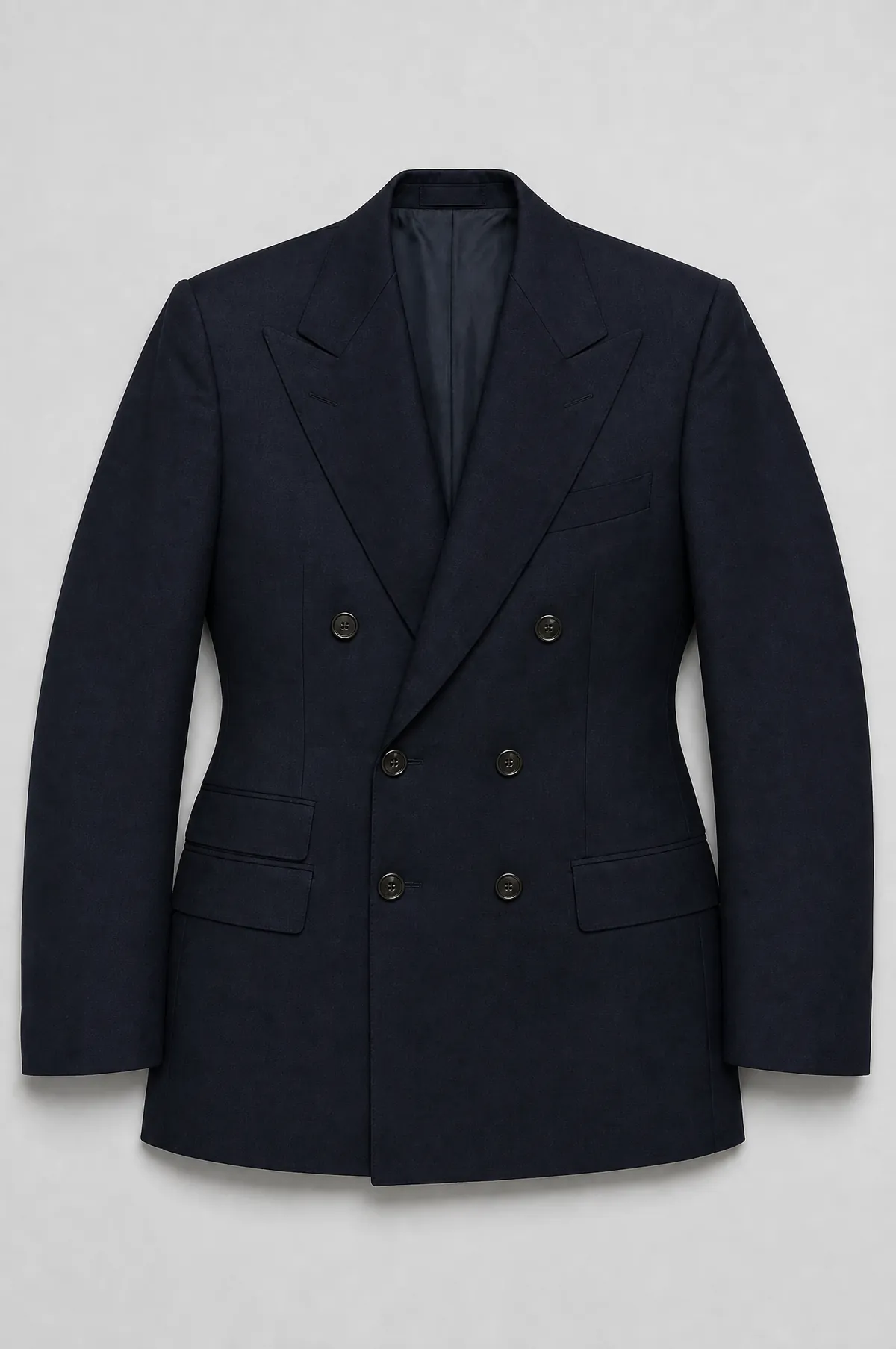
Broad peak, suppressed waist 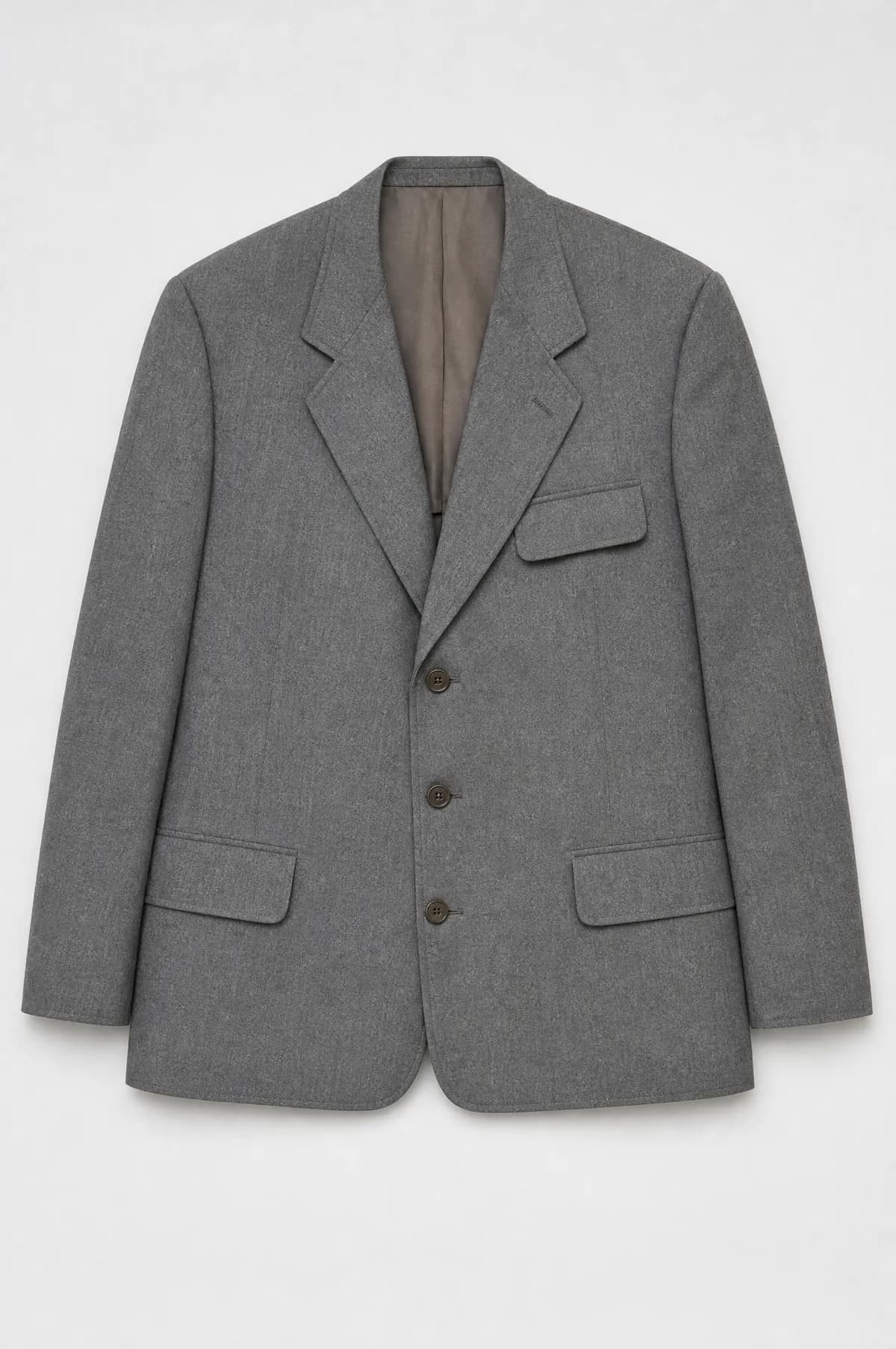
Square shoulder, wide notch 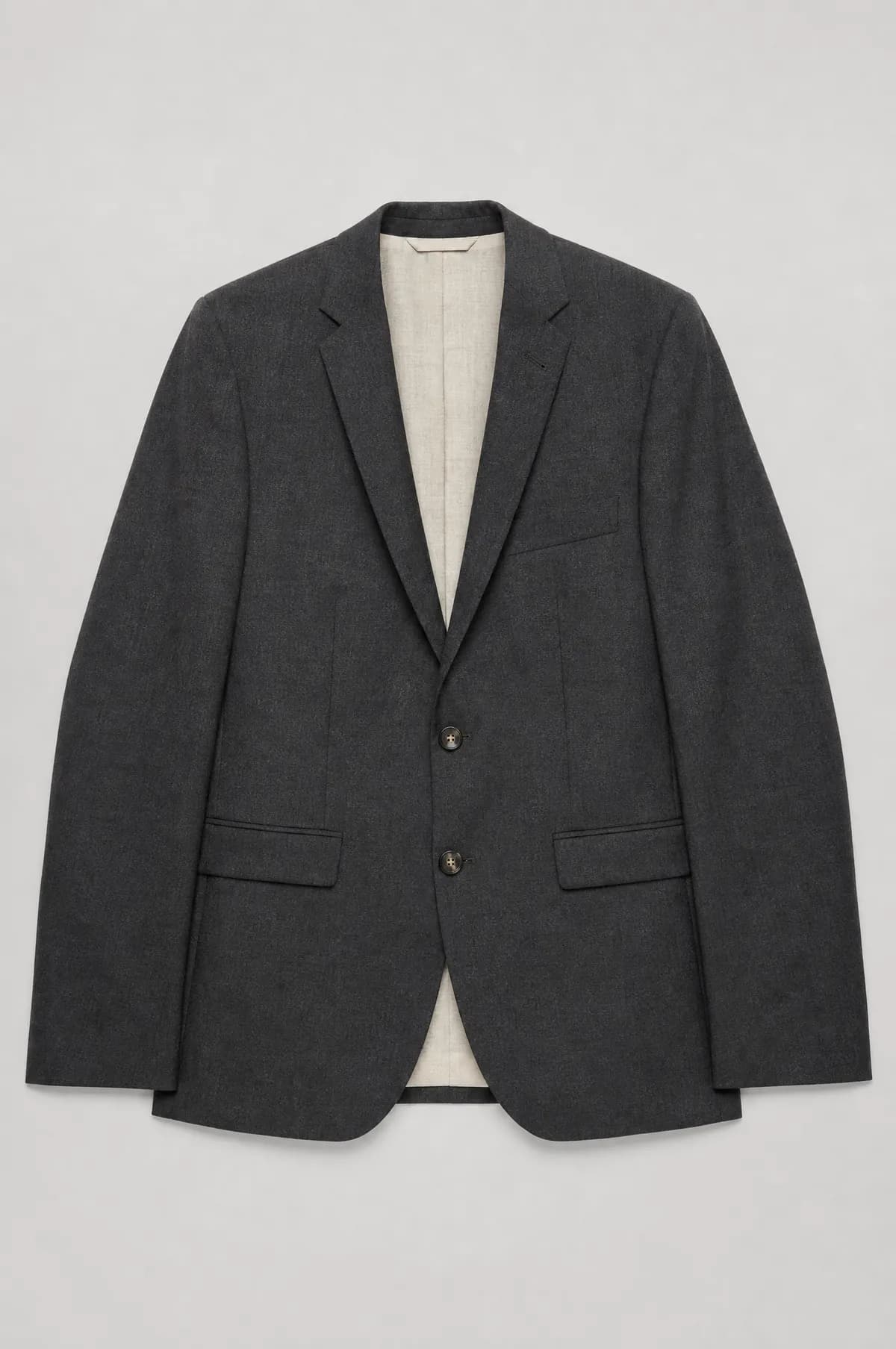
Narrow shoulder, slim lapel 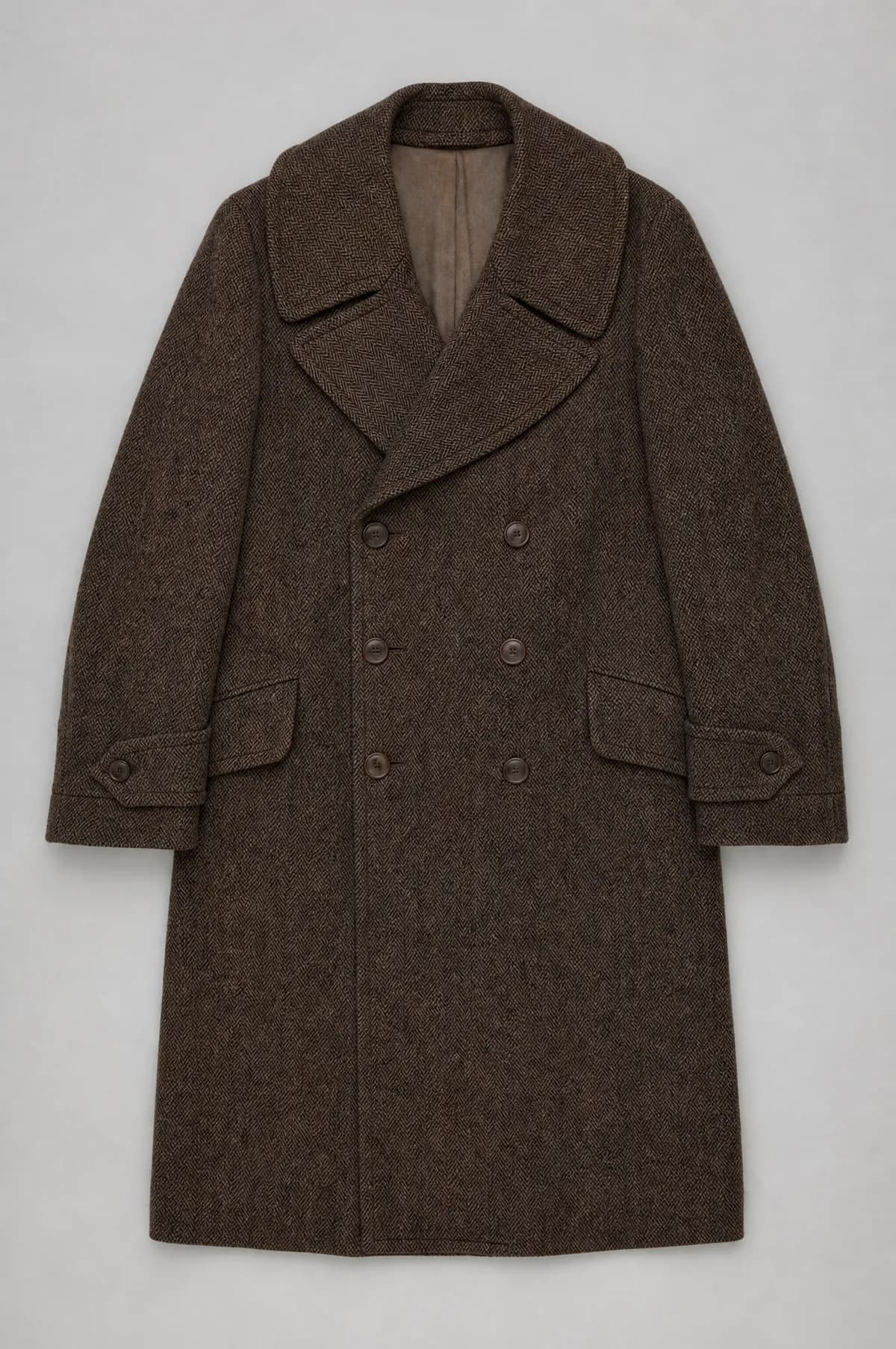
Ulster — storm collar, half belt 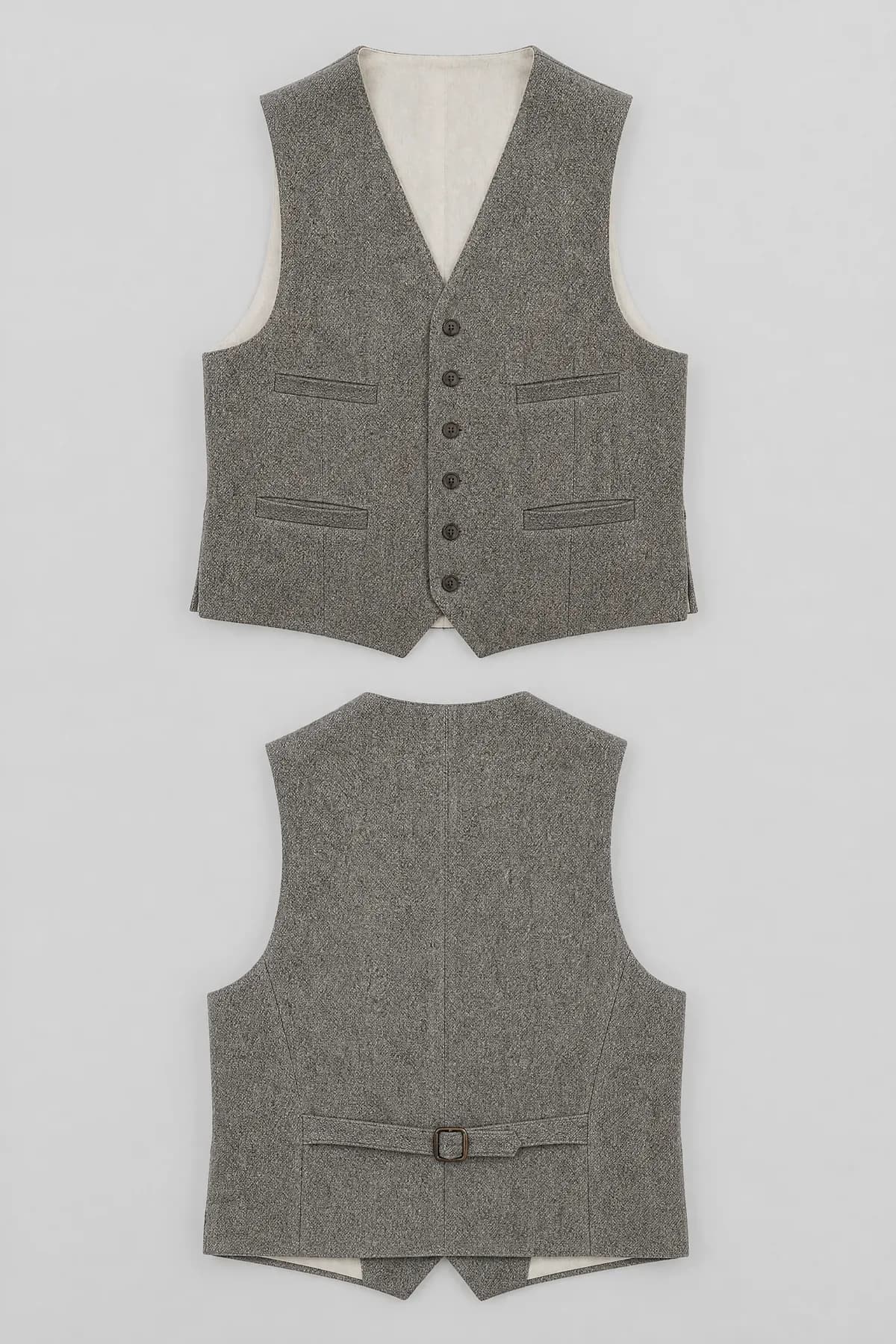
Waistcoat — four welt pockets 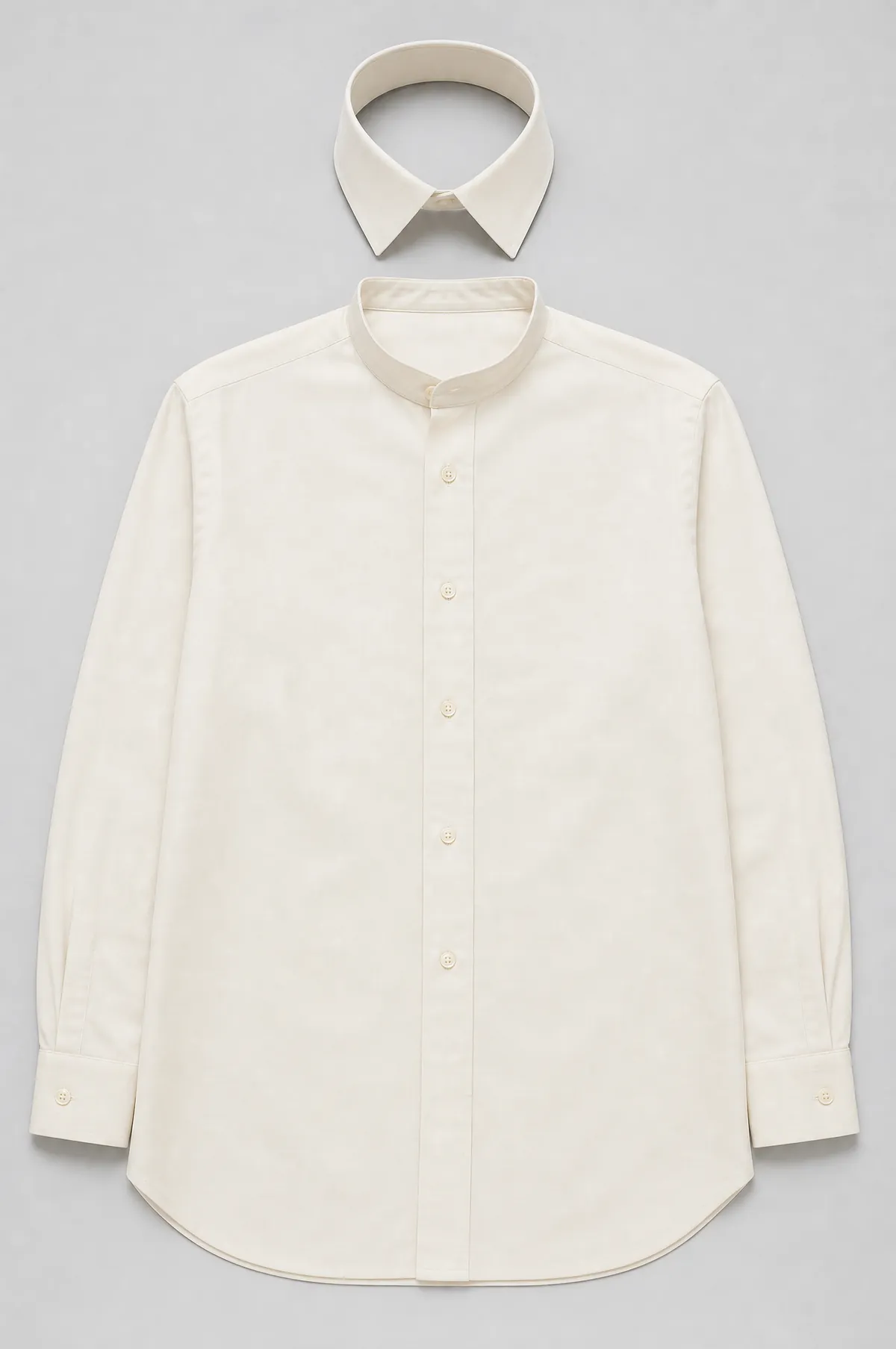
Detachable collar and neckband 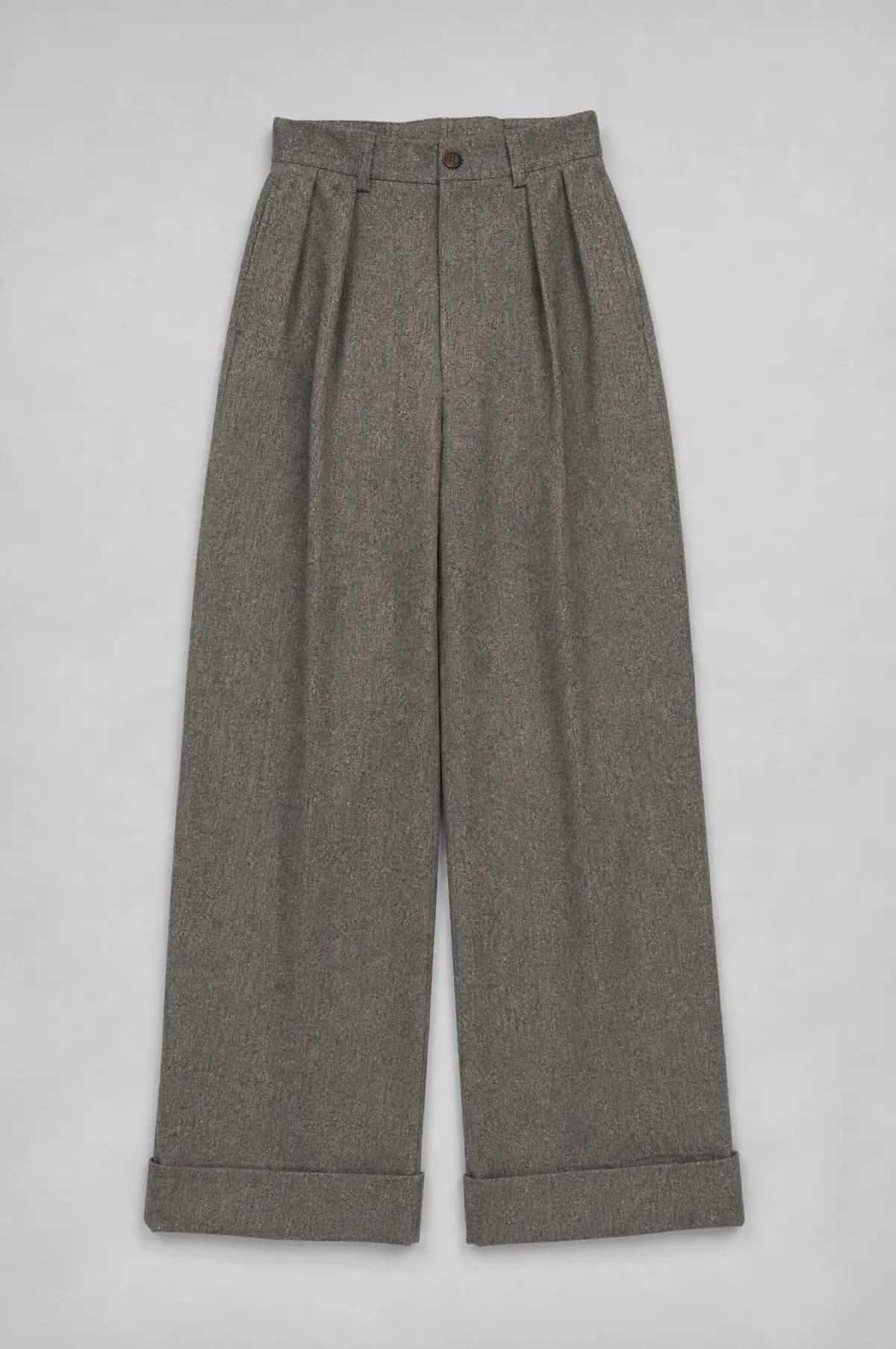
High rise, pleats, turn-ups 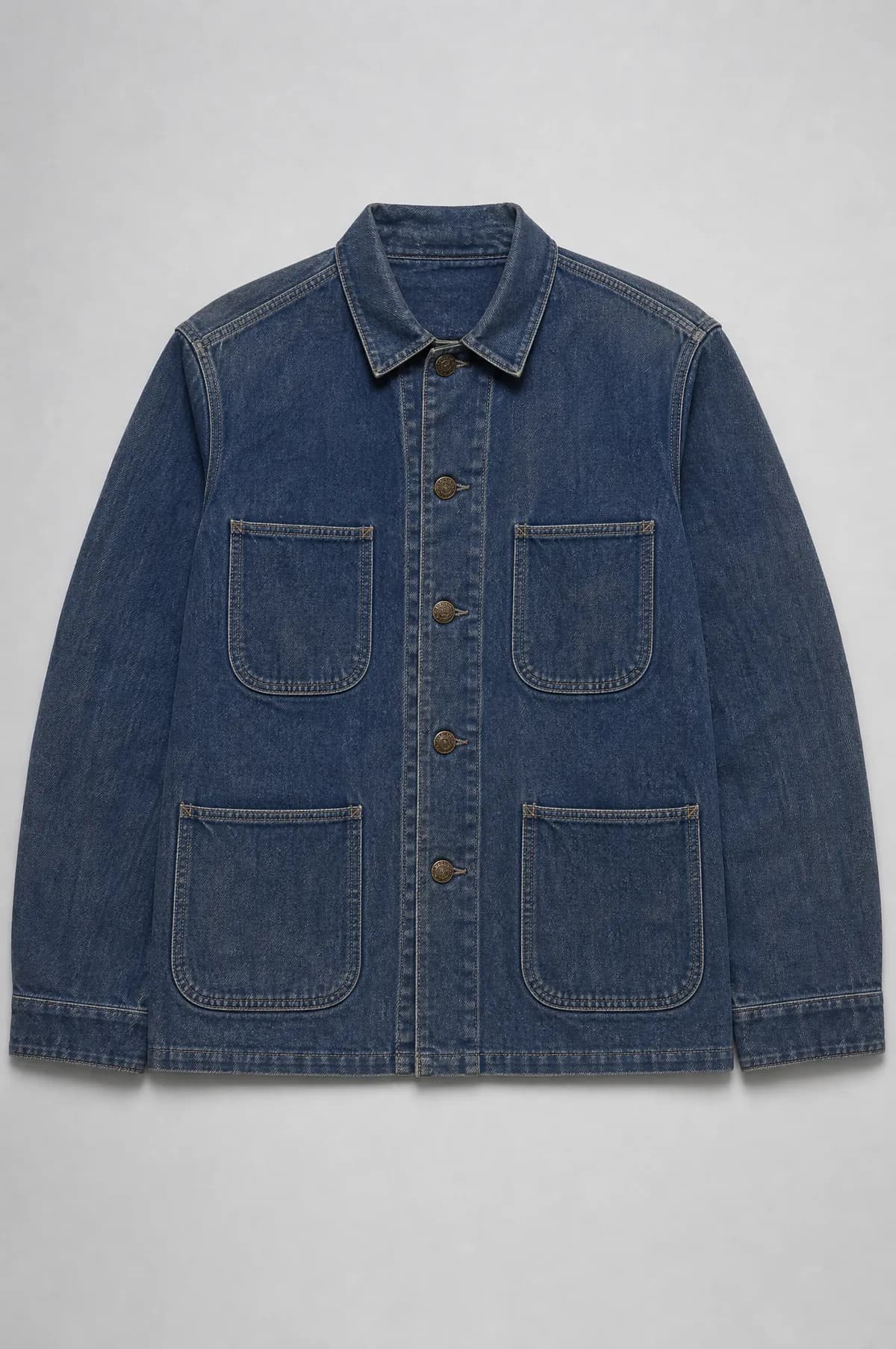
Work jacket — patch pockets
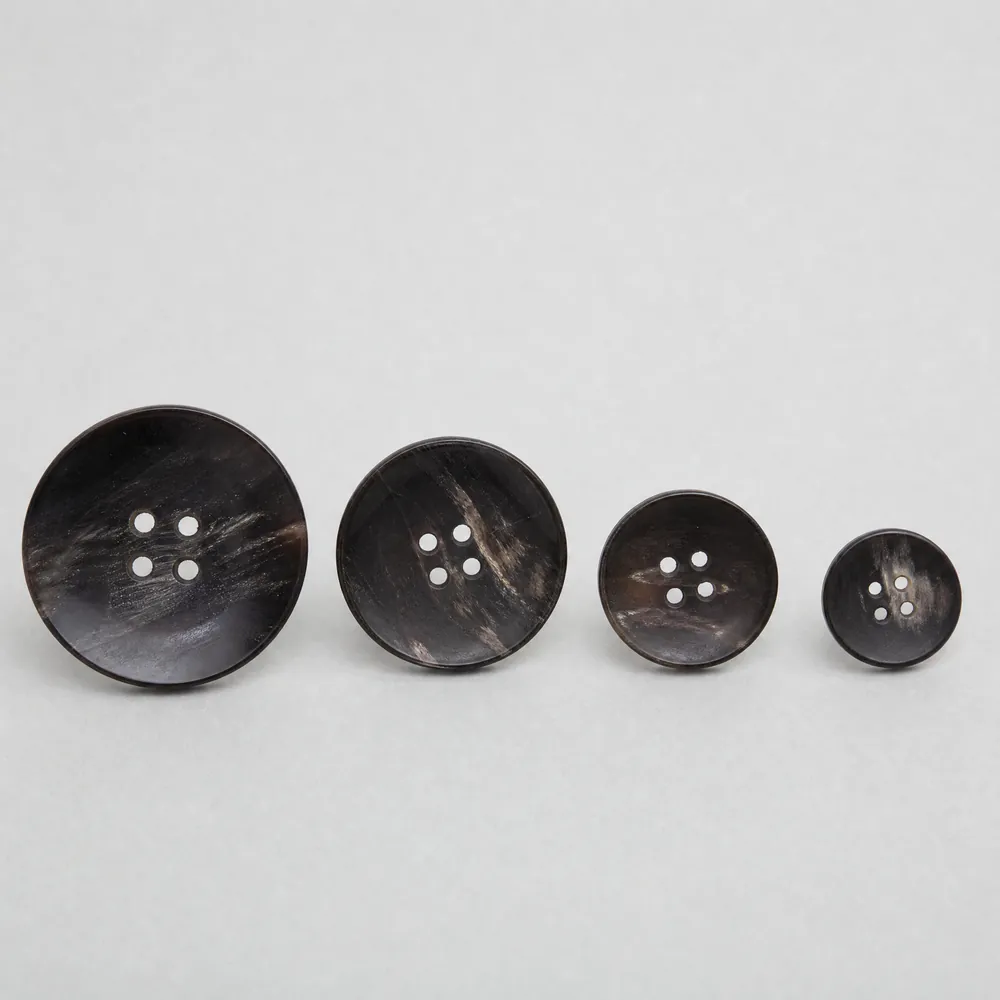
Button material1900–1990 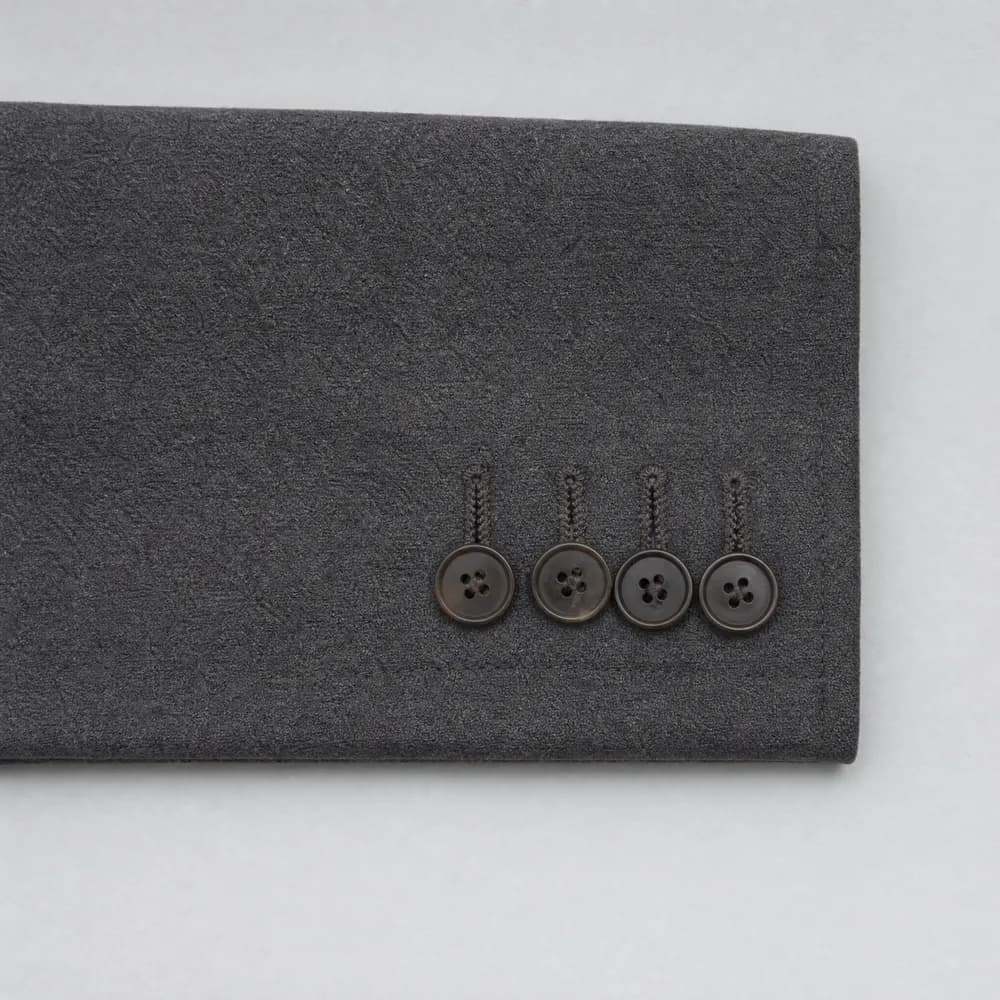
Cuff button spacing1900–1990 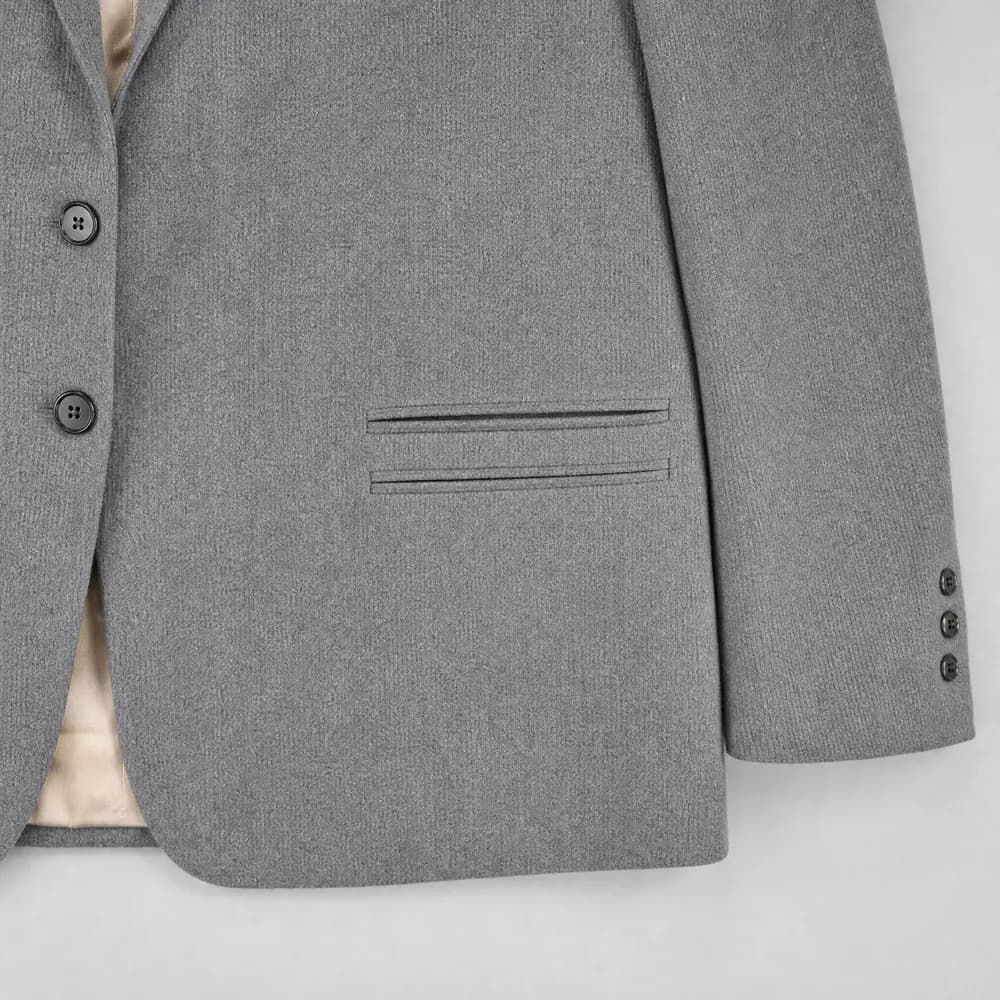
Besom hip pocket1900–1935 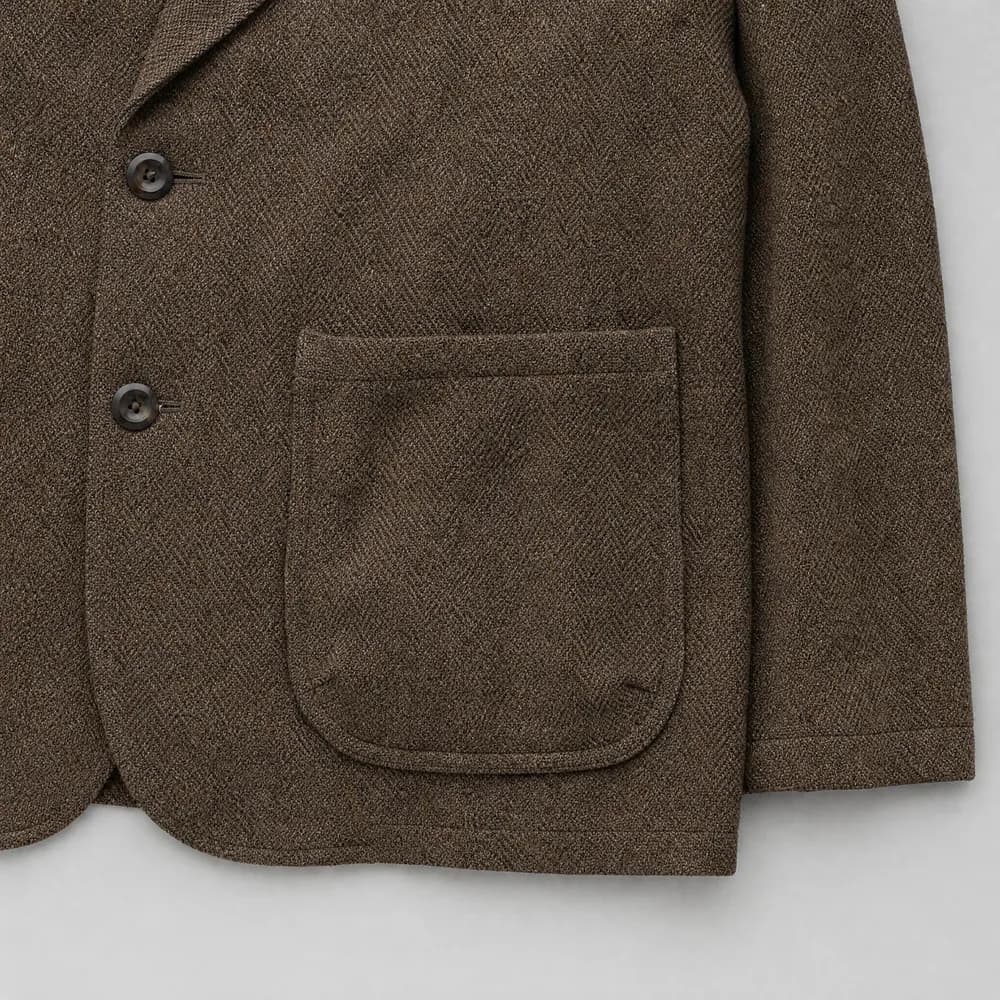
Patch hip pocket1925–1945 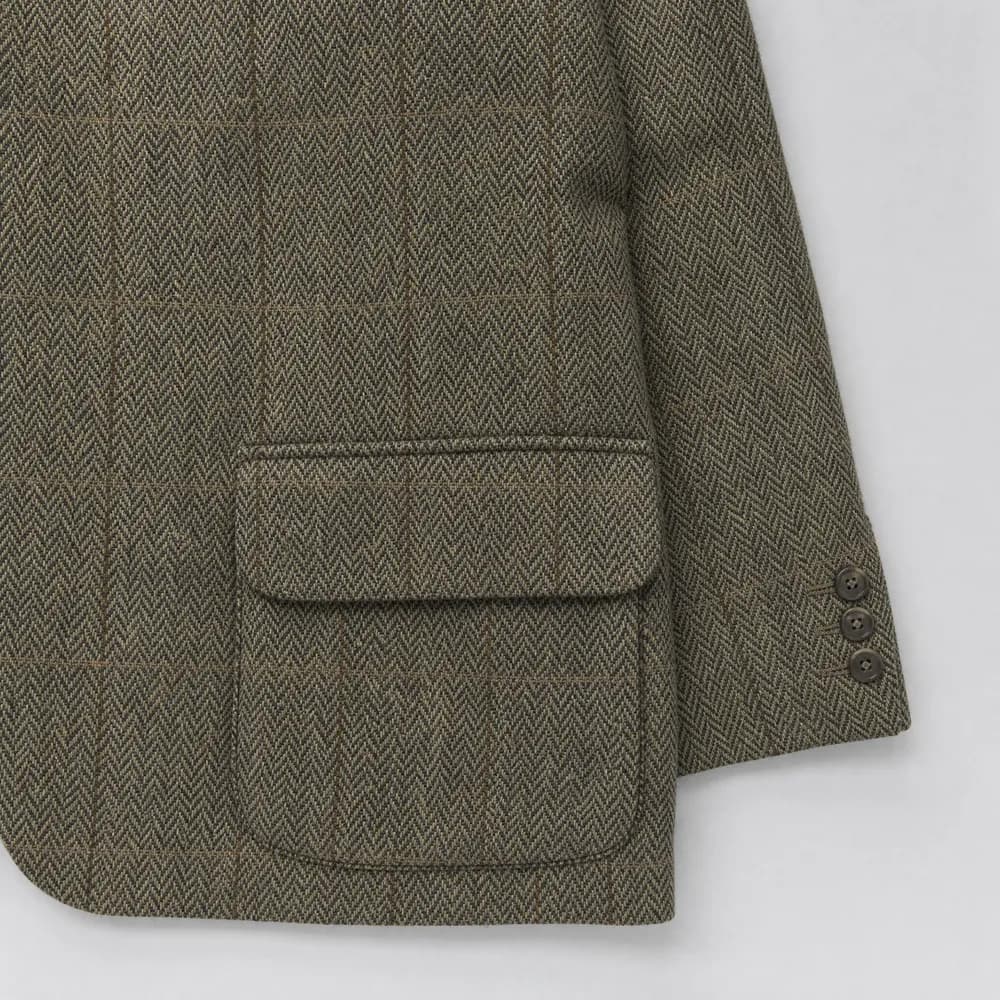
Flapped hip pocket1920–1990 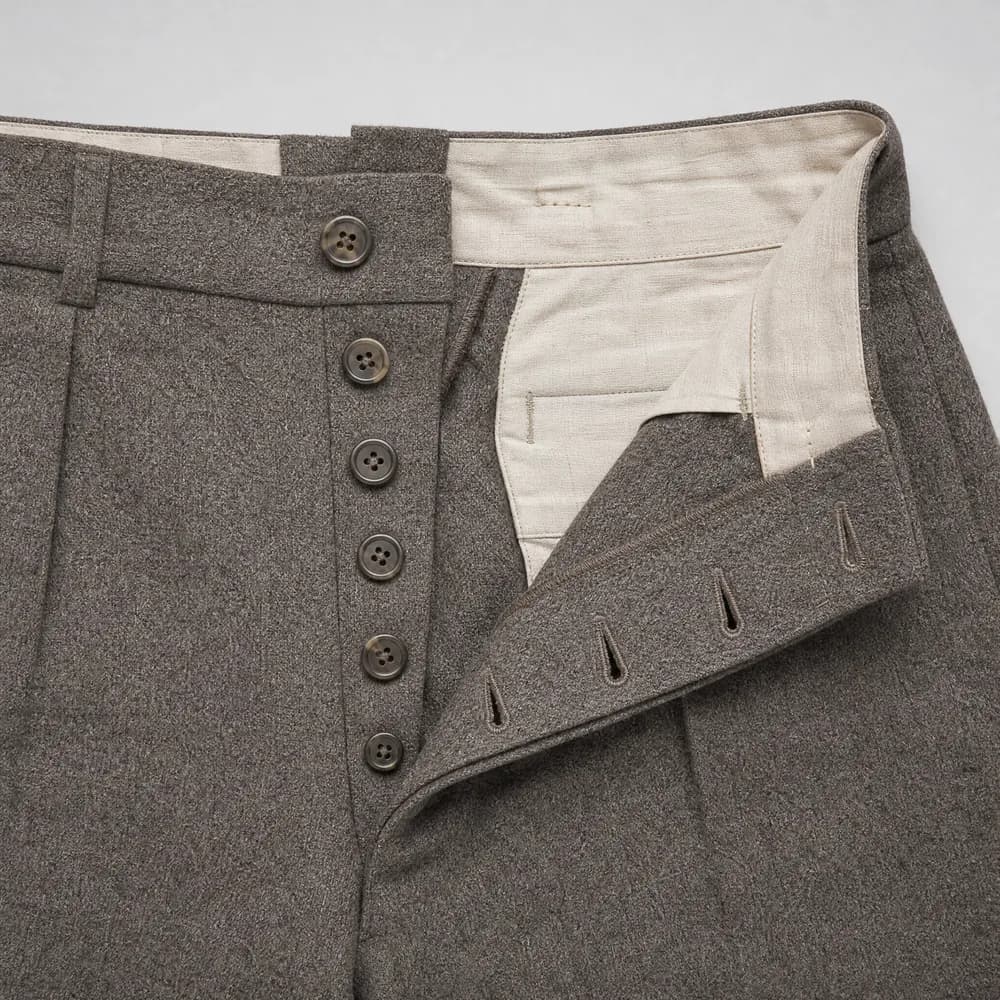
Button fly1900–1950 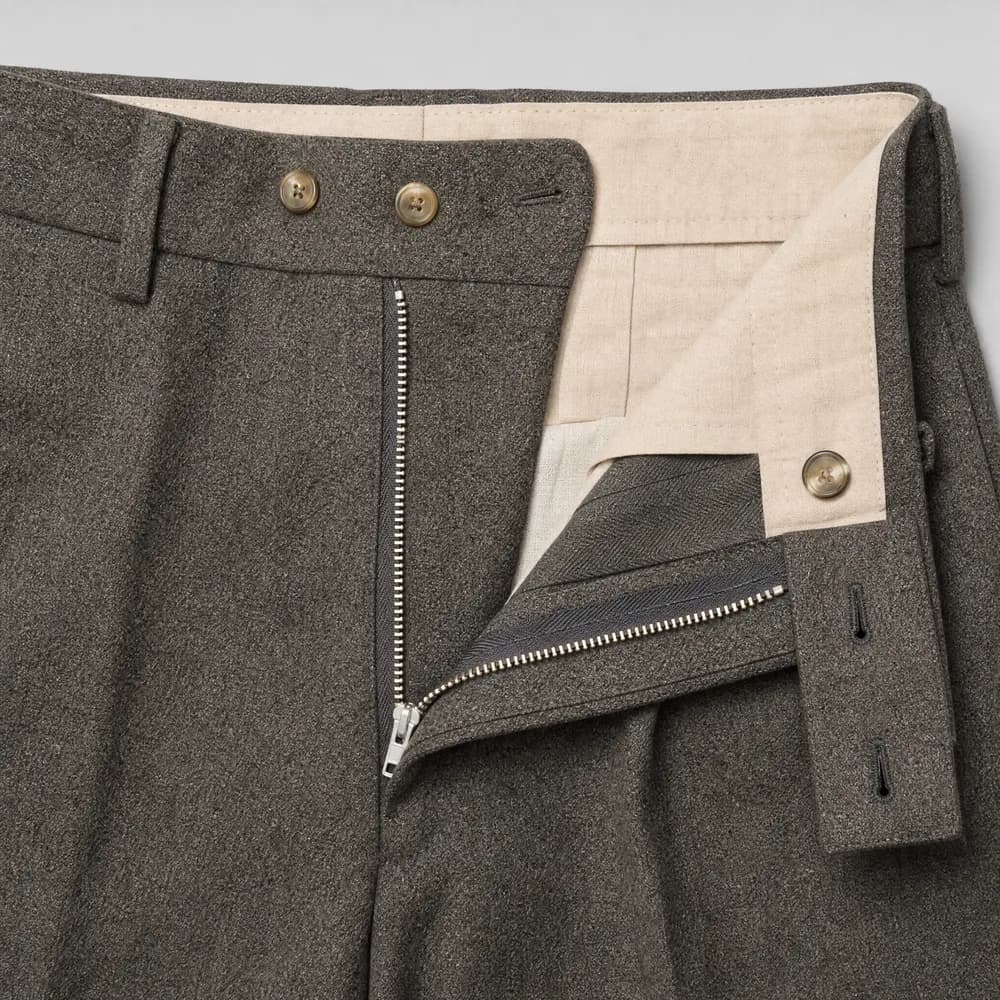
Zip fly1937–1975 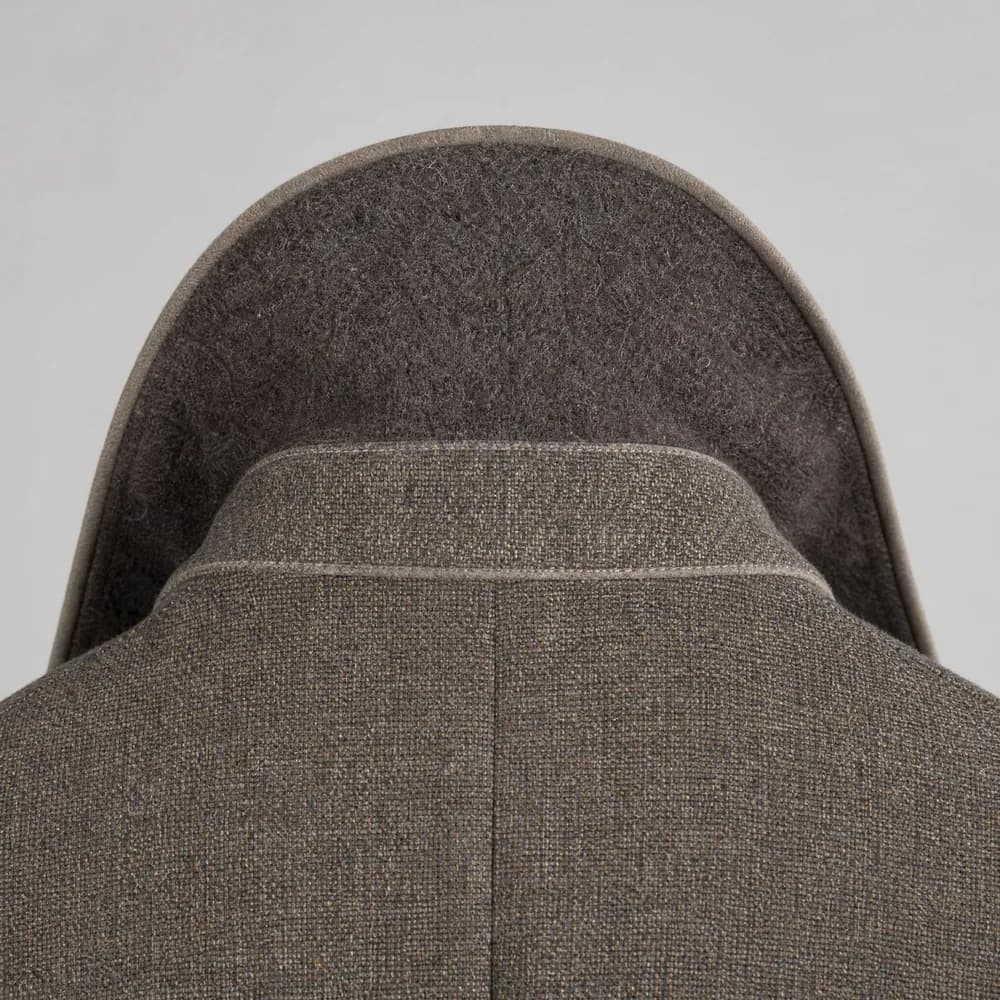
Collar stand1900–1990 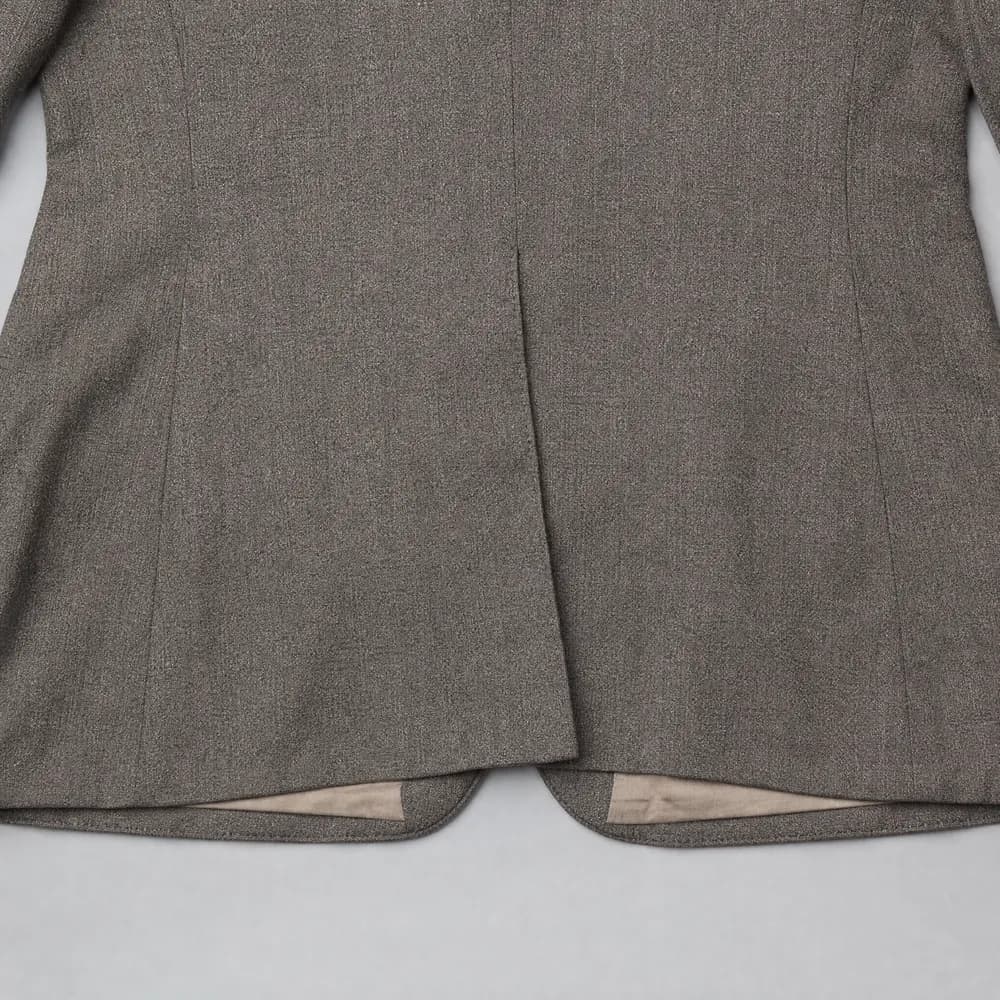
Back vent1930–1990 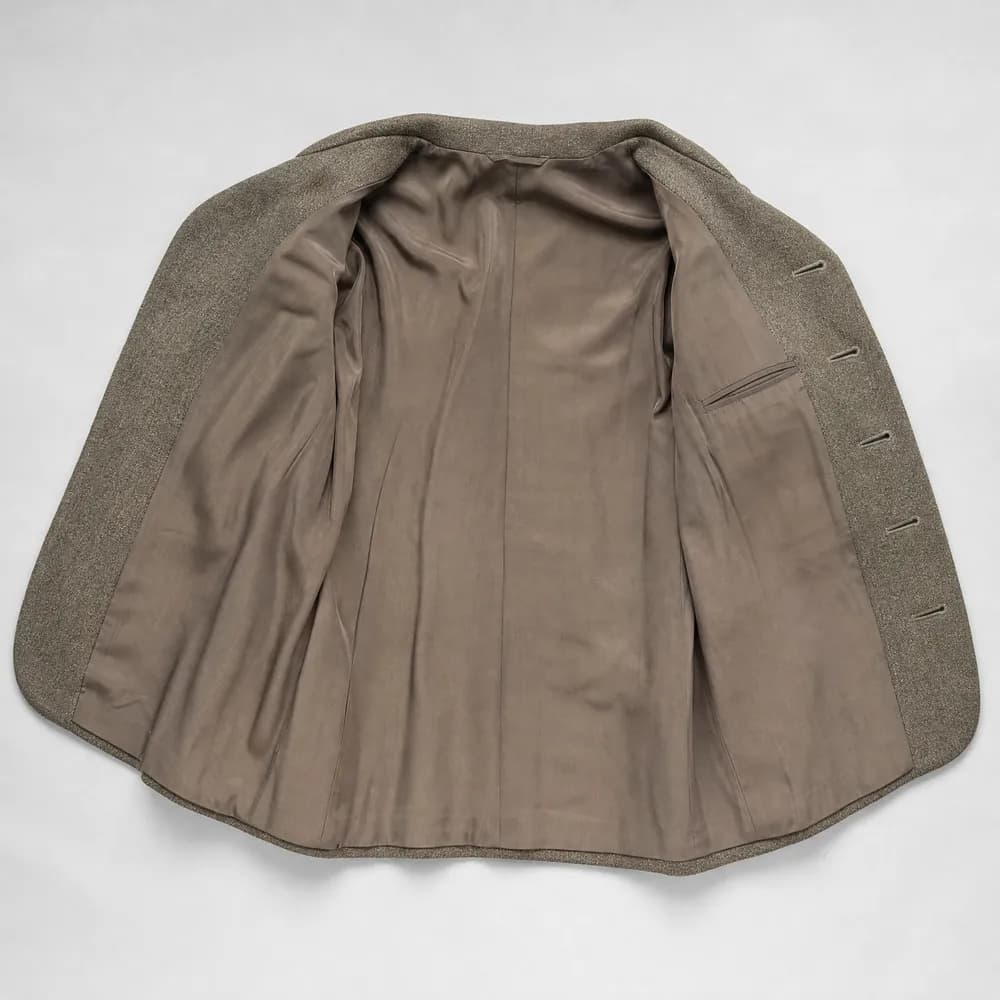
Lining and internal seams1900–1990
05 — Scope
Four questions this will not answer.
Not because they are unimportant, but because getting them wrong costs somebody real money, and because they belong to people who handle the object.
- Is it genuine?
- No authentication is performed and no verdict on genuineness is given. Where clues indicate a later making or a later alteration, that is reported as an observation about construction — and never as a finding about the object's status.
- What is it worth?
- No valuation of any kind. Period is one of many factors in value, and this service has no view on the others, nor on whether you should buy or sell.
- Who made it, and where?
- No brand identification and no attribution of origin. Construction habits travel, and a cut that reads as one workroom's is regularly another's.
- Would it suit me?
- No styling advice, no fit advice, and no photographs containing people, either as input or as output. The subject here is the garment.
The terms of service prohibit using anything produced here in a sale description, an auction catalogue entry, an authenticity claim or an insurance valuation. Read the terms.
06 — Plans
A wide interval is free. Narrowing it is what costs.
One whole-garment photograph gives you a wide span — often “mid twentieth century”, which is barely worth having. Narrowing depends on detail: a button, a pocket mouth, a fly, a hem, each adding its own interval. Paid plans read those together in one pass, which is also the only way a clash between two clues can surface at all.
All prices in US dollars (USD) and include VAT at 20%. No credit packs, no stored balance, no trial period.
Free
$0 / month
no card required
Read three garments a month from a single whole-garment photograph, and see how the interval is built.
50 credits each month
Era
$10 / month
or $96 a year, VAT included
Read many detail close-ups against the whole garment at once, which is the only way an interval gets narrow.
430 credits each month
Archive
$29 / month
or $278 a year, VAT included
For people holding a collection: keep readings together, and set one garment's clues against another's.
1600 credits each month
07 — Questions
Including the two everyone asks first.
Both of those have the same answer, and it is no.
- Is this one genuine, or is it a reproduction?
This service does not answer that question, and it is important to be plain about why rather than to hedge.
What it reads is construction: the width of a lapel, where the gorge sits, how a fly closes, whether a seam was overlocked. Each of those points to a period, and where several of them agree is the reading. Sometimes the clues cannot all be true of one making — a nylon coil zip in a garment whose cut reads twenty-five years earlier, say. When that happens the clash is reported at the top of the result, together with what such a clash usually means: a garment made later to an earlier pattern, or a part replaced during the garment's life.
That is an observation about construction. It is not an authentication finding, and it must not be relied on as one. A garment made later to an older pattern is a legitimate object with its own history, not a lesser one. If money is going to change hands, take the garment to a specialist who will examine it in person.
- What is it worth?
This service gives no valuation of any kind, and it has no view on whether you should buy or sell anything.
Period is only one of many things that bear on what a garment is worth, alongside condition, size, cloth, maker, completeness, provenance and what someone happens to want on the day. A period interval on its own tells you very little about value, and a tool that produced one would be pretending to a competence it does not have.
The terms of service prohibit using anything produced here in a sale description, an auction catalogue entry, an authenticity claim or an insurance valuation.
- Why do I get a range instead of a year?
Because a range is what the evidence supports. Every construction feature in the reference table points to a span of years, not to a date; the reading is the span where enough of those features can all be true at once.
A single year would be a stronger claim than the method can carry, and it would be unarguable — which is the real problem with it. Period readings are revised all the time, by people who know more than any table does. A range with its workings shown can be challenged feature by feature. A year cannot.
Where the overlap is narrow, the result says so and says which features made it narrow. Where it is wide, the result says that too.
- Are my photographs used to train models?
No. Photographs you upload are not used to train or fine-tune any model, ours or anyone else's, and they are not shared with third parties for that purpose.
They are held only as long as needed to produce and re-open your reading. On the Free and Era plans, uploads and their readings are deleted ninety days after the reading is produced. On Archive, records are kept for as long as the collection is active and are deleted ninety days after you delete the record or close the account, whichever is earlier.
You can delete any reading and its uploads at any time from the reading room, and you can delete everything at once from the billing page. The privacy notice sets out the legal bases, the retention periods and how to ask for a copy of your data.
- How accurate is it, and what happens when it is wrong?
The image step proposes which construction features it can see in a photograph. That step can be wrong: a photograph flattens, padding and cloth weight are hard to judge from an image, and a badly lit close-up will read a besom pocket as a flap.
The dating step is not a model at all. Every interval comes from a published reference table, and the overlap and the clash detection are computed in your browser from those numbers, so a reading can be recomputed by hand and checked. If a feature has been misread you can remove it from the reading and the interval recomputes in front of you.
Regional variation, workroom habit, bespoke and theatrical cutting, alterations and later reproductions all distort the clues, and the service cannot see any of them. Every result carries a list of what it cannot know.
- Why will it not accept a photograph with a person in it?
The service reads garments, not people. Photographs containing a person are refused at upload, and nothing produced here contains a human figure.
It also gives no advice on whether a garment suits you, how to wear it or what to wear it with. That is a different service, and this is not it.
- How do I cancel, and can I get a refund?
You can cancel from the billing page at any time, in one step, with no telephone call and no retention flow. Cancelling stops the next renewal; your plan continues to the end of the period you have paid for.
As a consumer in the United Kingdom you normally have 14 days to cancel a subscription to digital services and receive a refund. At checkout you are asked, in two separate boxes that are not pre-ticked, whether you want the service to start immediately, and whether you accept that starting immediately means you lose that 14-day right once the service has been fully performed. If you do not tick them, the service starts after the 14 days and your right is untouched. Both statements are repeated in the confirmation email.
Beyond that, we go further than the law currently requires: every renewal is preceded by a reminder email sent on its own, and a fresh 14-day cancellation period runs from each renewal. Full detail is on the cancellation page.
- What happens to my credits at the end of the month?
Credits are a measure of service use. They are issued for the month in which they apply, they do not carry over, and there is no way to buy more separately — there are no credit packs and no stored balance. If you run out, you can move to a higher plan or wait for the next month.
Credits are not money, are not stored value, cannot be redeemed for cash and cannot be transferred to anyone else.
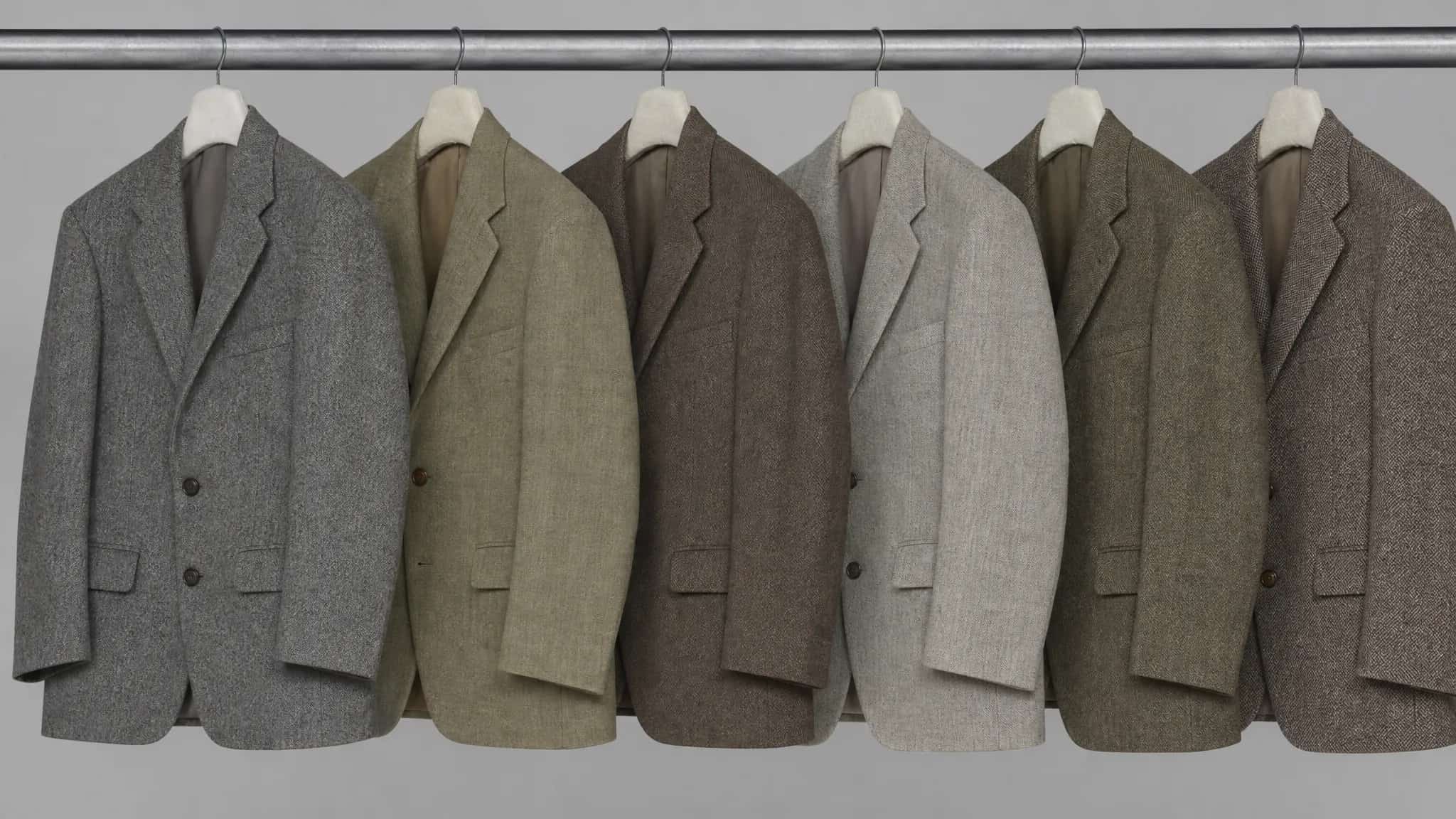
Lay it flat.
Take one photograph.
Three readings a month cost nothing and need no card. You will get a wide interval and the full list of what produced it, which is already more than an impression of oldness will ever give you.